


Imagine a world where your devices react faster than a human blink, where self-driving cars make life-saving decisions in milliseconds, and where smart factories never skip a beat. This is the power of edge computing, a technology that moves data processing away from distant data centers and closer to the source of the information. However, as we move through 2026, the biggest question for tech enthusiasts and business leaders is no longer “How does it work?” but rather “What does it cost?”
The shift toward decentralized processing is changing how we think about IT budgets. While it promises to save money on long-distance data travel, it also introduces new expenses in hardware, security, and local maintenance. Understanding the financial side of this technology is essential for anyone looking to stay ahead in the modern tech world.
Key Takeaways
- Bandwidth Savings: Moving to the edge significantly reduces the costs associated with sending massive amounts of data to a central cloud.
- Initial Investment vs. Long-term ROI: High upfront hardware costs are often balanced by lower operational expenses over time.
- Operational Complexity: Managing many small sites is more expensive than managing one large data center, requiring smart automation.
- The “Hidden” Costs: Security, specialized power needs, and local cooling can surprise those who don’t plan carefully.
1. The Core Components of Edge Computing Costs
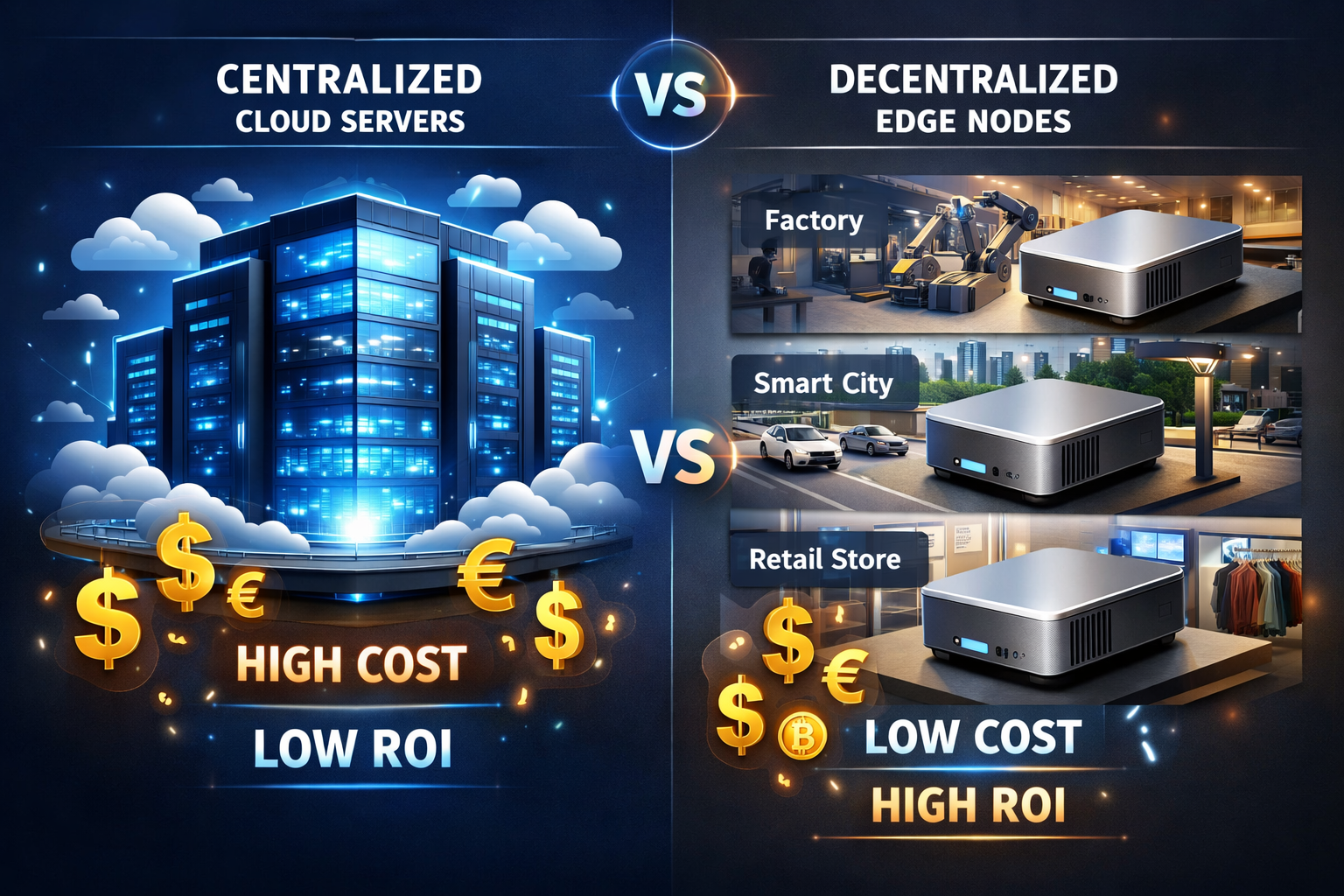
When we talk about edge computing, we are looking at a complete shift in how infrastructure is built. In the past, you simply rented space in a giant cloud provider’s facility. Today, in 2026, you are likely building a distributed network.
Hardware and Infrastructure
The most obvious cost is the physical gear. Unlike a central cloud where you benefit from “economies of scale” (buying in huge bulk), edge computing requires many smaller units. These include:
- Edge Gateways: Small devices that act as a bridge between sensors and the network.
- Micro Data Centers: Self-contained racks that include power, cooling, and servers.
- Specialized Sensors: High-tech tools that collect data at the source.
Bandwidth and Data Transfer
One of the biggest reasons people switch to edge computing is to save on bandwidth. Sending a high-definition video feed from a remote camera to a cloud 500 miles away is expensive. By processing that video at the “edge,” you only send a tiny text alert when something happens. This can reduce data transfer costs by up to 90%.
Software and Licensing
Running software on 1,000 different locations is more complex than running it on one. You need specialized “orchestration” software to make sure every edge device is updated and working correctly. In 2026, these software licenses are often sold on a “per-node” basis, which can add up quickly as your network grows.
“The true cost of the edge isn’t just the box you buy; it’s the connectivity and the management of a thousand tiny boxes spread across the map.” — Senior Infrastructure Analyst, 2026
2. Comparing Edge vs. Cloud: A Financial Breakdown
Choosing between a traditional cloud setup and an edge computing model requires a side-by-side comparison. It isn’t always a matter of one being “cheaper” than the other; it is about which one provides the best value for your specific needs.
| Cost Category | Traditional Cloud | Edge Computing (2026) |
|---|---|---|
| Initial Capital (CapEx) | Low (Pay-as-you-go) | High (Buying hardware) |
| Monthly Operating (OpEx) | High (Data transfer fees) | Lower (Reduced data transit) |
| Maintenance | Included in service | Requires local support |
| Scalability | Near-instant | Requires physical install |
| Latency Costs | High (Delay risks profit) | Low (Real-time response) |
Why Latency is a “Hidden” Cost
In 2026, time is literally money. For a high-frequency trading platform or an automated warehouse, a delay of even 50 milliseconds can result in lost revenue or damaged goods. When we do a cost analysis, we must include the “cost of delay.” Edge computing eliminates this delay, which often pays for the hardware costs in a matter of months.
Energy Consumption
Central data centers are very efficient at cooling and power. Edge sites, however, are often in “dirty” environments like factory floors or outdoor utility poles. This means you might spend more on specialized cooling fans and ruggedized shells to keep the equipment from overheating.
3. Operational Expenses (OpEx) in a Distributed World
Once your edge computing network is live, the focus shifts to keeping it running. This is where many enthusiasts find the most surprises.
Deployment and Installation
You cannot simply “click a button” to deploy an edge node. A technician often has to physically go to the site. Whether it is a retail store or a cell tower, the “truck roll” (sending a repair person) is a major expense. Companies in 2026 are combatting this by using Zero Touch Provisioning (ZTP), where the device sets itself up the moment it is plugged in.
Security Costs
Securing one big data center is like guarding one giant castle. Securing edge computing is like guarding 500 small houses.
- Physical Security: Someone could literally steal the edge device.
- Cybersecurity: Every node is a potential entry point for hackers.
- Updates: Sending security patches to 1,000 devices takes more “compute power” and management time than updating one central server.
Maintenance and Monitoring
In 2026, AI-driven monitoring is the standard. You need tools that can predict when a fan will fail or when a hard drive is about to crash. While these AI tools save money by preventing downtime, the tools themselves have a monthly subscription cost that must be factored into your edge computing budget.
4. The 2026 ROI Factor: When Does it Pay Off?
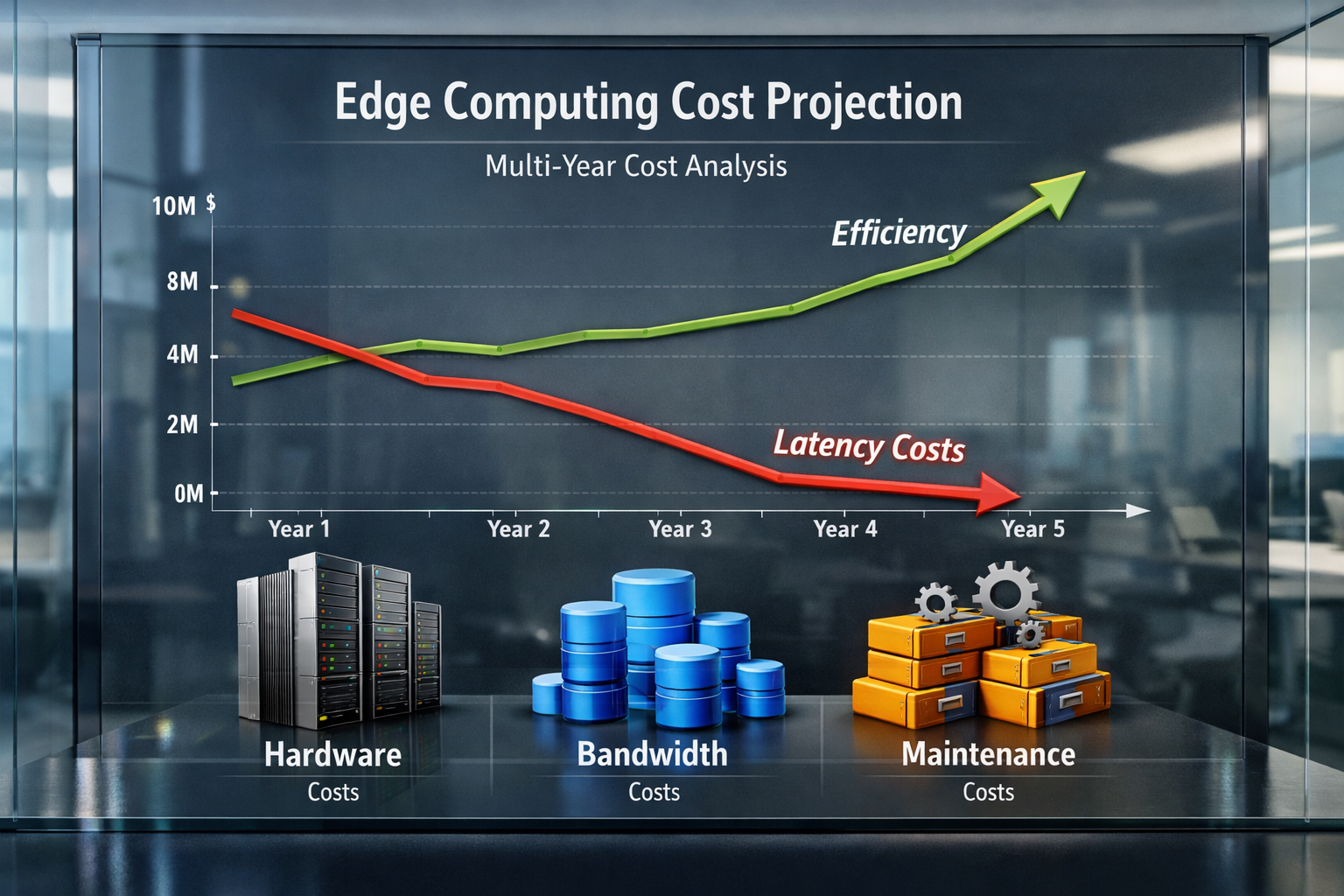
Return on Investment (ROI) is the ultimate goal. For most organizations, edge computing reaches a “break-even” point when the savings in bandwidth and the gains in speed outweigh the cost of the hardware.
Industry Examples of ROI
- Manufacturing: A factory uses edge nodes to spot defects in real-time. By stopping the assembly line immediately instead of waiting for cloud processing, they save $50,000 in wasted materials per month.
- Retail: Stores use edge processing for “smart shelves.” The cost of the sensors is paid for by a 15% reduction in “out-of-stock” items and better inventory management.
- Smart Cities: Traffic lights that use edge computing to adjust timing based on real-time flow reduce congestion. The city saves money on road wear and emergency response times.
Scaling Strategies
To keep costs low, many are adopting a “Hybrid Edge” approach. They use edge computing for immediate, mission-critical tasks and use the cloud for long-term data storage and deep analysis. This balances the high speed of the edge with the low storage costs of the cloud.
5. Future-Proofing Your Edge Investment
As we look toward the end of 2026 and into the future, the technology is becoming more affordable. 📦 Standardization is the key. As more companies use the same types of edge hardware, prices are dropping.
Steps to Minimize Costs:
- Start Small: Run a pilot program at one location to understand the power and cooling needs before scaling to 100 locations.
- Focus on Automation: Use software that can fix common errors without needing a human to visit the site.
- Negotiate Bandwidth: Since you are sending less data, talk to your internet provider about different pricing tiers that favor “low-volume, high-priority” traffic.
The Role of 5G and 6G
The expansion of 5G networks in 2026 has made connecting edge devices easier and cheaper. You no longer need to run expensive fiber-optic cables to every single node. High-speed wireless connections allow for more flexible—and cheaper—installations.
Conclusion
Conducting an edge computing cost analysis reveals a complex but rewarding financial picture. While the upfront costs for hardware and site-specific setup are higher than traditional cloud models, the long-term benefits are undeniable. By reducing bandwidth fees, eliminating expensive latency, and enabling real-time decision-making, the edge provides a level of efficiency that the central cloud simply cannot match.
For tech enthusiasts and business leaders in 2026, the secret to success is not just buying the latest gear. It is about building a smart, automated system that minimizes the need for human intervention. If you plan for security, prioritize automation, and understand your data transit costs, edge computing can be one of the most profitable investments of the decade.
Actionable Next Steps
- Audit Your Data: Identify which parts of your data need an instant response (Edge) and which can wait (Cloud).
- Evaluate Hardware: Look for “ruggedized” equipment if your edge nodes will be in non-office environments to avoid replacement costs.
- Invest in Orchestration: Choose a software platform that can manage all your nodes from a single dashboard to save on labor costs.
- Calculate the Latency Gap: Determine how much money a one-second delay costs your business—this is your primary justification for edge spending.


