

Are you curious about what it takes to maintain an electric vehicle? If you’re considering making the switch to electric or already own an EV, you’ve probably wondered about electric car maintenance requirements. Here’s some great news: maintaining an electric car is significantly simpler and more cost-effective than caring for a traditional gasoline vehicle.
Think of it this way – while a gas car is like a complex orchestra with hundreds of moving parts that need constant tuning, an electric car is more like a well-designed quartet. Fewer components mean fewer things can go wrong, and that translates to less maintenance headache for you.
Why Electric Car Maintenance is Different (and Easier)
The Simplified Mechanical System
Electric vehicles operate on a fundamentally different principle than internal combustion engines. Instead of explosions, pistons, and countless mechanical components working in harmony, EVs rely on electric motors that have just one moving part. This elegant simplicity is what makes electric car maintenance so refreshingly straightforward.
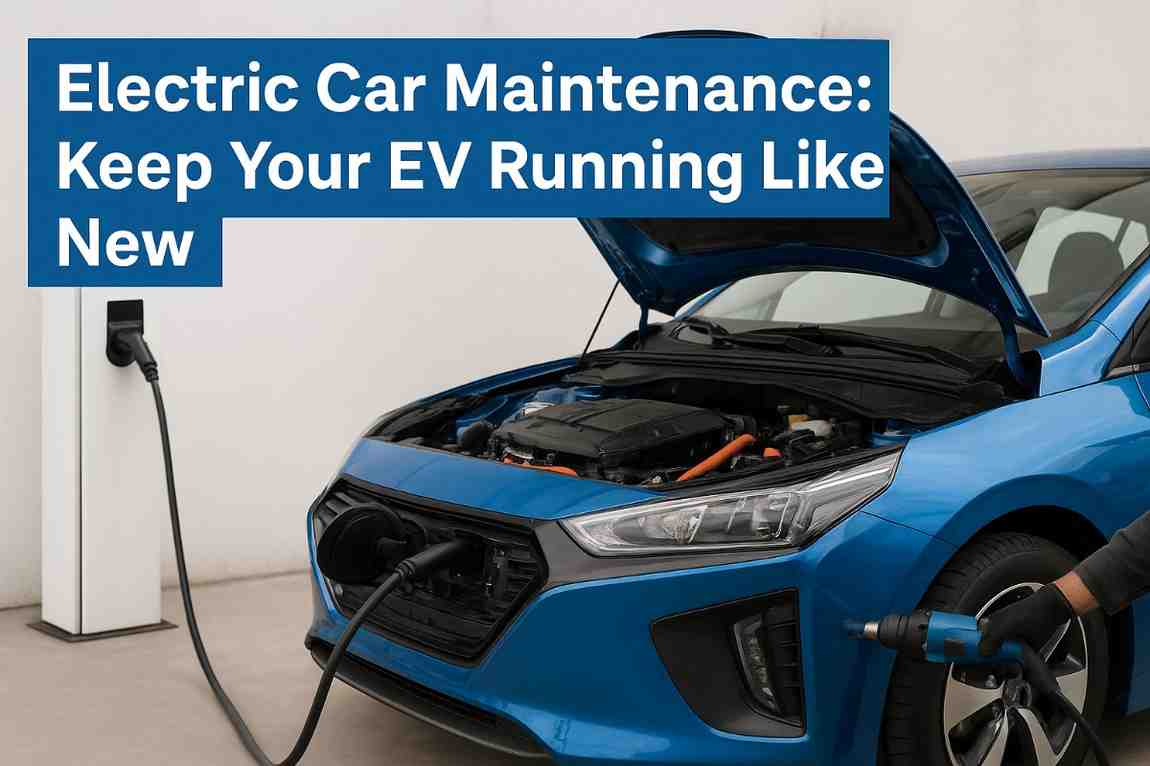
When you pop the hood of a traditional car, you’ll see a maze of belts, hoses, filters, and fluids. An electric car’s “engine bay” looks almost empty by comparison. There’s no transmission to service, no spark plugs to replace, and no timing belt to worry about snapping at the worst possible moment.
No More Oil Changes and Engine Repairs
Remember those dreaded reminders about oil changes every 3,000 to 5,000 miles? With an electric vehicle, that’s history. No oil means no oil changes, no oil filters, and no worries about engine seizure from forgotten maintenance. You’ll never again experience that sinking feeling when you realize you’re 2,000 miles overdue for an oil change.
The absence of combustion also means no exhaust system to rust out, no catalytic converter to replace, and no emissions tests to stress about. It’s like having a pet that doesn’t need daily walks – the basic care is still there, but the demanding routine maintenance virtually disappears.
Essential Electric Car Maintenance Tasks You Can’t Ignore
Battery Care and Monitoring
Your EV’s battery pack is like the heart of the system, and just like your heart, it needs proper care to keep pumping strong. Battery maintenance for electric cars isn’t complicated, but it is crucial for maximizing your vehicle’s range and lifespan.
Most modern EVs come with sophisticated battery management systems that handle much of the heavy lifting automatically. These systems monitor cell temperatures, balance charge levels, and protect against overcharging. However, you still play a vital role in battery health through your charging habits and driving patterns.
The key is understanding that EV batteries prefer moderate temperatures and partial charging cycles rather than constantly running from empty to full. Think of it like your smartphone battery – the same principles apply, just on a much larger scale.
Tire Maintenance for EVs
Here’s something that surprises many new EV owners: tire maintenance is actually more important for electric cars than conventional vehicles. Why? Electric vehicles deliver instant torque, which can wear tires faster if you’re heavy on the accelerator pedal.
Additionally, many EVs are heavier than their gas counterparts due to battery weight, putting extra stress on tires. The good news is that proper tire maintenance can actually improve your EV’s efficiency and range. Well-maintained tires with proper pressure can add miles to your driving range – it’s like getting free extra battery capacity.
Regular rotation, pressure checks, and alignment ensure even wear patterns. Many EV owners find they need to rotate tires more frequently, about every 5,000 miles instead of the traditional 7,500-mile interval.
Brake System Checks
Ironically, one of the most critical safety systems in your car requires less attention in an EV. Thanks to regenerative braking, your brake pads and rotors experience significantly less wear. When you lift your foot off the accelerator in an EV, the motor essentially runs in reverse, converting kinetic energy back into electricity while slowing the vehicle.
This means your traditional friction brakes do less work, lasting much longer than in conventional cars. However, this can create its own maintenance consideration – brake components can develop rust or corrosion from underuse. That’s why regular brake inspections remain important, even if replacements are less frequent.
Battery Maintenance: The Heart of Your Electric Vehicle
Charging Best Practices
Proper charging habits form the foundation of good electric car maintenance. Unlike filling up a gas tank, charging an EV battery involves some strategy to maximize longevity and performance. The golden rule? Avoid the extremes.
Most battery experts recommend keeping your charge level between 20% and 80% for daily driving. It’s like eating – your battery performs best when it’s neither starving nor overstuffed. Reserve those full 100% charges for long road trips when you need maximum range.
Consider your charging routine like meal planning. Just as you wouldn’t eat one massive meal per week, your battery prefers frequent, smaller charging sessions rather than deep discharge and recharge cycles. If you can plug in daily or every few days, you’ll keep your battery happier than letting it run low before long charging sessions.
Temperature Management
Avoiding Extreme Temperatures
Temperature is to EV batteries what kryptonite is to Superman – extreme heat or cold can significantly impact performance and longevity. Most modern electric vehicles include thermal management systems that regulate battery temperature, but you can help by being mindful of where and how you park.
In summer, seek shade when possible. In winter, consider preconditioning your vehicle while it’s still plugged in. This process warms up the battery and cabin using grid electricity instead of precious battery power, extending your driving range in cold weather.
Optimal Charging Habits
Fast charging is convenient, but it’s like sprinting versus jogging for your battery. While DC fast charging won’t damage modern EV batteries when used occasionally, making it your primary charging method can accelerate battery degradation over time.
For daily use, Level 2 charging at home or work provides the best balance of convenience and battery health. It’s the equivalent of a good night’s sleep for your EV – slow, steady, and restorative.
Preventive Maintenance Schedule for Electric Cars
Monthly Checks
Creating a monthly electric car maintenance routine takes just a few minutes but can prevent larger issues down the road. Start with a visual inspection of your charging port for any debris, corrosion, or damage. Clean it gently with a dry cloth if needed.
Check tire pressure using a quality gauge – remember, proper pressure affects both safety and efficiency. Walk around your vehicle looking for any obvious issues like damaged panels, lights that aren’t working, or fluid leaks (yes, EVs still have fluids for cooling systems and windshield washers).
Quarterly Inspections
Every three months, dig a little deeper into your EV’s health. Test all lights, including headlights, taillights, turn signals, and hazards. Inspect windshield wipers and replace them if they’re leaving streaks or making noise.
This is also a good time to check your charging cables for any signs of wear or damage. A damaged charging cable isn’t just inconvenient – it can be dangerous.
Annual Professional Services
Even with minimal maintenance needs, annual professional inspections remain valuable for electric car maintenance. A qualified technician can perform software updates, check high-voltage system integrity, and inspect components you can’t easily access.
Many manufacturers recommend annual coolant system checks, as EVs use coolant to regulate battery and motor temperatures. While these systems are generally reliable, professional inspection ensures everything operates within specifications.
Common Electric Car Maintenance Myths Debunked
“EVs Need No Maintenance”
This is perhaps the most dangerous myth about electric vehicles. While electric car maintenance is simpler than conventional car care, “no maintenance” is simply false. EVs still have tires that wear out, brake fluid that ages, air filters that clog, and software that needs updates.
The reality is more nuanced – EVs need different maintenance, not no maintenance. Understanding this distinction helps you properly care for your investment while avoiding unexpected issues.
“Battery Replacement is Always Expensive”
Battery replacement costs have dropped dramatically as technology improves and production scales up. Moreover, most EV batteries are designed to outlast the vehicle itself. Many manufacturers offer 8-year warranties on battery packs, and real-world data shows most batteries retain 80% capacity well beyond this timeframe.
When replacement is eventually needed, you’re not necessarily looking at a complete battery pack replacement. Many systems allow for individual module replacement, significantly reducing costs.
Cost Comparison: Electric vs. Gas Car Maintenance
Long-term Savings Analysis
The numbers tell a compelling story about electric car maintenance costs. According to industry studies, EV owners spend approximately 40% less on maintenance compared to conventional vehicle owners. Over a vehicle’s lifetime, this can translate to thousands of dollars in savings.
Consider the eliminated expenses: no oil changes, no transmission services, no exhaust system repairs, no spark plug replacements, and significantly reduced brake maintenance. These savings add up quickly, often offsetting higher initial purchase prices within a few years.
Hidden Costs to Consider
While maintenance costs are generally lower, EVs do have some unique considerations. Software updates, while often free, sometimes require professional installation. Tire replacement can be more frequent due to instant torque characteristics. Home charging station installation represents an upfront cost, though many utilities offer rebates to offset this expense.
For comprehensive information about EV technology and maintenance tips, visit TechByte Blog for expert insights and detailed guides.
Professional vs. DIY Electric Car Maintenance
What You Can Do at Home
Many aspects of electric car maintenance are well within the average owner’s capabilities. Basic tasks like checking tire pressure, cleaning charging ports, updating software, and replacing cabin air filters require no special training or tools.
Visual inspections, fluid level checks (for coolant and washer fluid), and basic cleaning represent the bulk of routine EV maintenance. These simple tasks help you stay connected with your vehicle’s condition while saving money on service visits.
When to Visit a Professional
High-voltage systems require professional attention – this isn’t the place for DIY experimentation. Any work involving the battery pack, charging system diagnostics, or software troubleshooting should be handled by certified technicians.
Additionally, while EVs have fewer mechanical components, those that exist (like suspension systems and HVAC) still require professional expertise for major repairs or replacements.
Conclusion
Electric car maintenance represents a paradigm shift from traditional vehicle care – simpler, more cost-effective, and environmentally friendly. By understanding your EV’s unique needs, from battery care to tire maintenance, you can maximize performance while minimizing costs.
The key takeaway? While EVs require different maintenance approaches, they don’t eliminate the need for regular care entirely. Embrace the simplified routine, stay consistent with basic checks, and enjoy the peace of mind that comes with fewer moving parts and lower maintenance costs.
Remember, proper electric car maintenance not only protects your investment but also ensures you get maximum enjoyment and efficiency from your electric vehicle for years to come.
FAQs
Q: How often should I charge my electric car battery? A: Charge your EV battery whenever convenient, ideally keeping it between 20-80% for daily use. Daily charging is perfectly fine and often better than letting the battery run low before charging.
Q: Do electric cars need oil changes? A: No, electric cars don’t need oil changes because they don’t have internal combustion engines. This eliminates one of the most frequent and expensive maintenance tasks associated with traditional vehicles.
Q: How long do electric car batteries last? A: Most EV batteries are designed to last 8-15 years or 100,000-200,000 miles while retaining at least 80% of their original capacity. Many manufacturers offer 8-year warranties on battery packs.
Q: Are electric cars more expensive to maintain? A: No, electric cars typically cost about 40% less to maintain than gasoline vehicles due to fewer moving parts, no oil changes, and reduced brake wear from regenerative braking.
Q: Can I perform electric car maintenance myself? A: You can handle basic maintenance like tire pressure checks, cleaning, and software updates. However, high-voltage system work should always be performed by certified professionals for safety reasons.
Explore more Green Technology Tools
- Wind Turbine for Home
- Carbon Footprint Tracking Software: A Vital Tool for Sustainable Business Practices
- Easy Flashing FRP Bypass 8.0 APK: What You Need to Know Before Attempting
- Smart Home Automation Protocols: The Complete Guide to Building Your Connected Home in 2025
- Water Conservation Methods: How Digital Professionals Can Make a Real Impact

